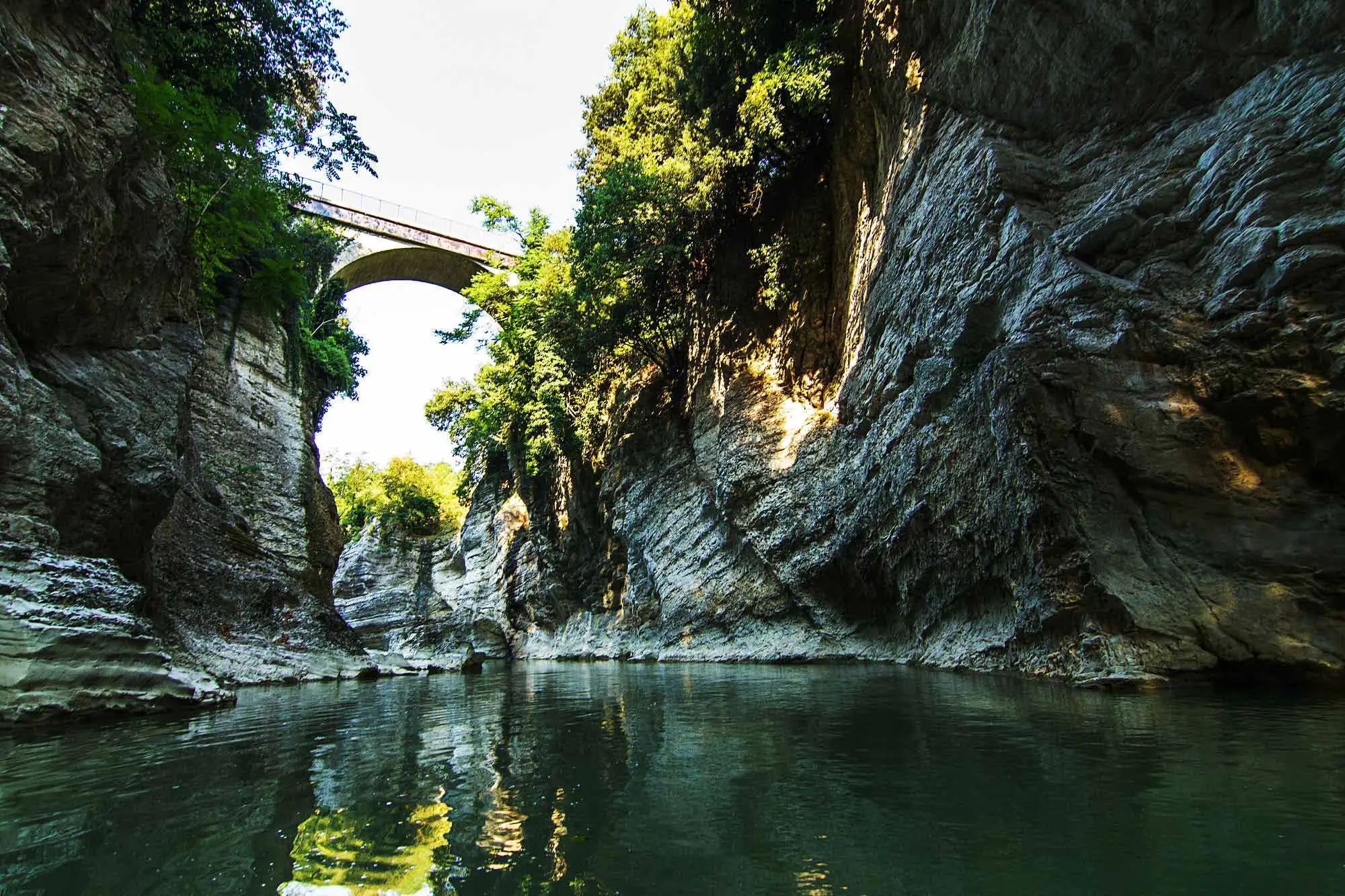
Limestone that preserves the shapes
Around San Lazzaro, the Metauro flows through limestone of the Maiolica Formation. This hard, compact rock, often containing flint, has preserved the carved and smoothed surfaces over time.
San Lazzaro · Fossombrone · Marche, Italy
Near Fossombrone, in San Lazzaro, the Metauro has carved large rounded cavities into the limestone: these are the Marmitte dei Giganti. From nearby Ponte dei Saltelli, you can look down into San Lazzaro Gorge, with its water, pale rock walls and vegetation.
Photo: Davide Tonelli
Where they are
The Marmitte dei Giganti are in San Lazzaro, a hamlet of Fossombrone in the province of Pesaro and Urbino. Here the Metauro enters San Lazzaro Gorge, a limestone gorge about 500 metres long. In places, the walls reach 30 metres high and the banks are just one and a half metres apart.
It is a compact landscape of pale rock, water and riverside vegetation. The smooth cavities can be seen from above near Ponte dei Saltelli and, where access is permitted, from paths leading down to the river.
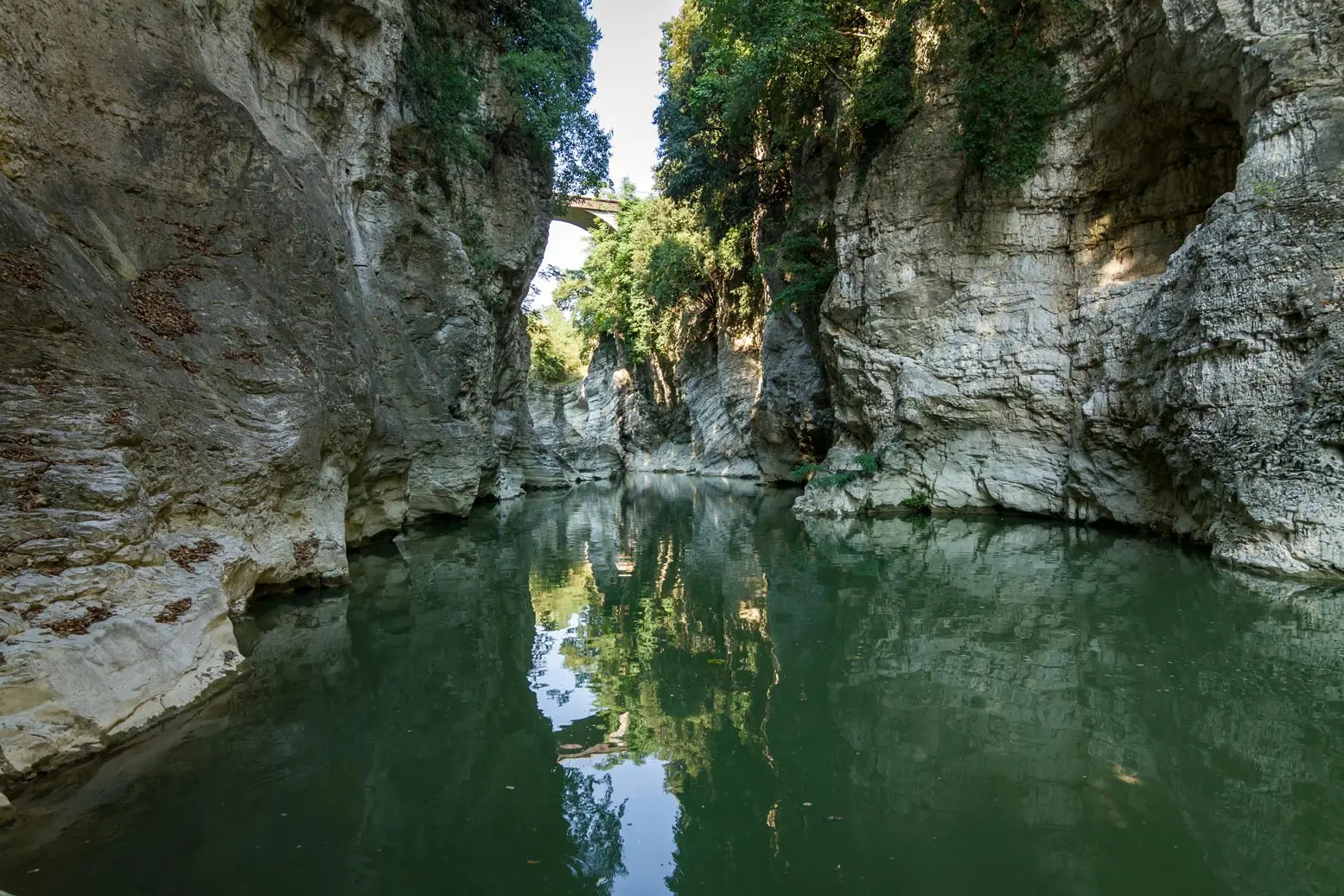
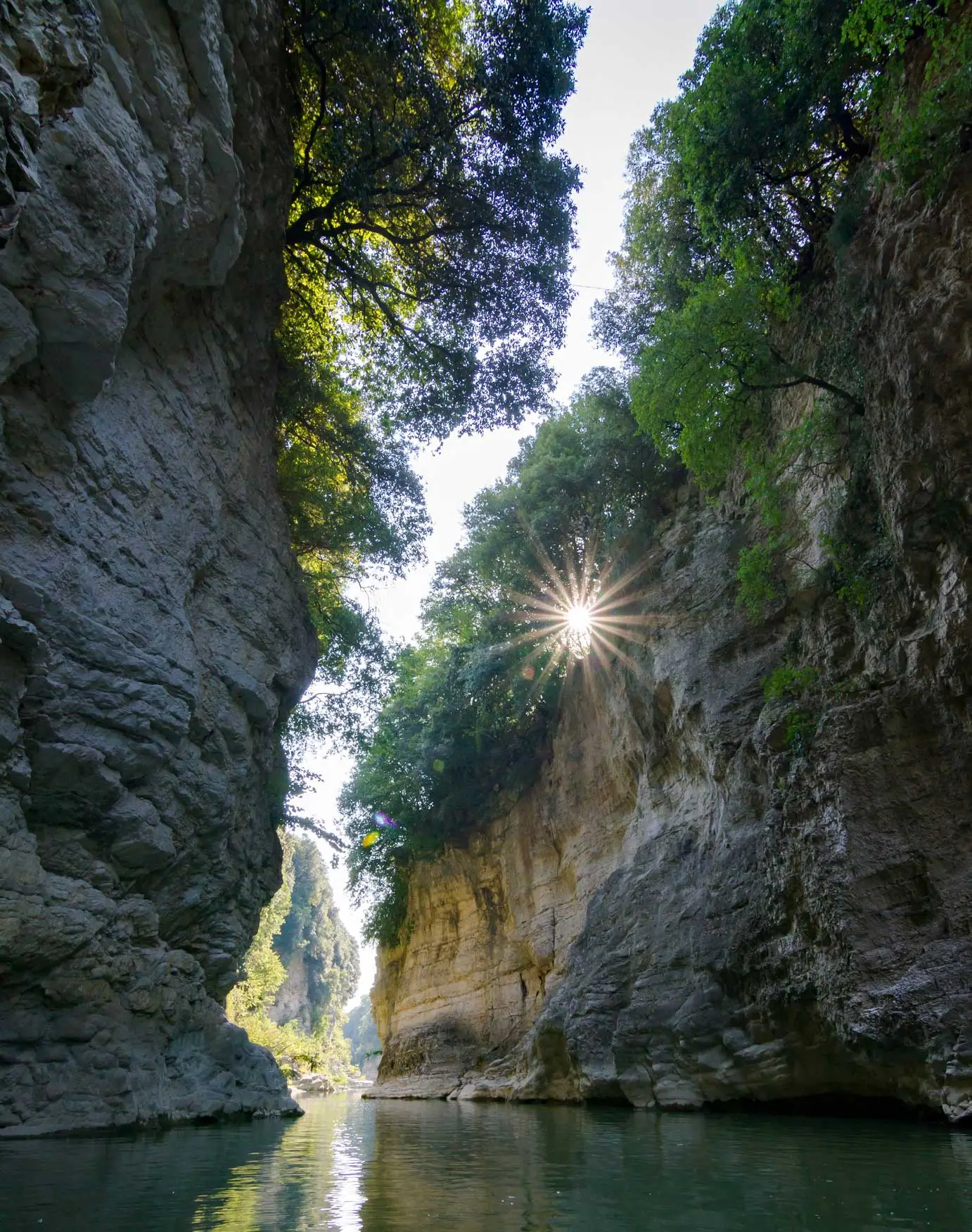
Rock, water, time
Here the landscape does not reveal itself all at once. First you hear the water, then you notice the vertical cut of the gorge and finally the rounded surfaces that give the place its name. These potholes are not simply holes in the rock: they are the visible trace of a current working repeatedly in the same places.
When the river has more energy, it carries gravel and pebbles. When these materials are trapped in small whirlpools, they rotate on the bed and walls like natural abrasives. In this way a slight hollow can widen, deepen and become a stable cavity.
Geology
The Marmitte dei Giganti are the result of slow, continual work. In this narrow stretch of the gorge, the Metauro and the sediment it carries have carved, smoothed and rounded the limestone.
Around San Lazzaro, the Metauro flows through limestone of the Maiolica Formation. This hard, compact rock, often containing flint, has preserved the carved and smoothed surfaces over time.
When the flow increases, the water speeds up and creates whirling currents. Pebbles carried along by the river can spin in place and wear away the limestone through abrasion.
Geological reconstructions indicate an ancient river channel now hidden by alluvial deposits. It is a trace of how the Metauro has changed its course over time.
Some hollows higher up on the walls are no longer reached by the usual flow. They record earlier stages in the gorge’s formation and help explain how it has evolved.
How to visit
Ponte dei Saltelli crosses San Lazzaro Gorge and is the easiest place to view it from above. Its name recalls the small cascades that once characterised this stretch of the Metauro.
The gorge is a river environment: water levels can change and wet rocks are slippery. A little care and common sense will help you enjoy it safely.
The site lies just outside Fossombrone, near the ancient Flaminia route. It makes a good stop on an itinerary through the Metauro valley, towards Cesana or the Furlo Gorge.
Images
A closer look at the gorge, Ponte dei Saltelli and the Metauro: rock, water and limestone walls capture the atmosphere of this stretch of river.
Where we are
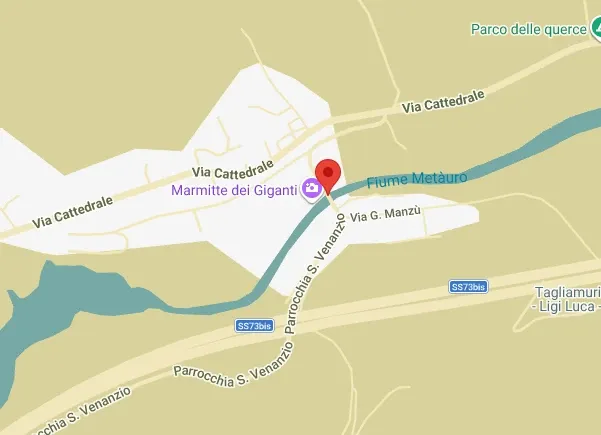
The marker shows the gorge area in San Lazzaro. Open it in your navigation app to reach the location and see how it relates to Ponte dei Saltelli and the nearby roads.
Territory
After taking in the gorge from above, the Marmitte can be the starting point for discovering Fossombrone and the Metauro valley landscape: Roman history, Renaissance architecture and another water-carved gorge.
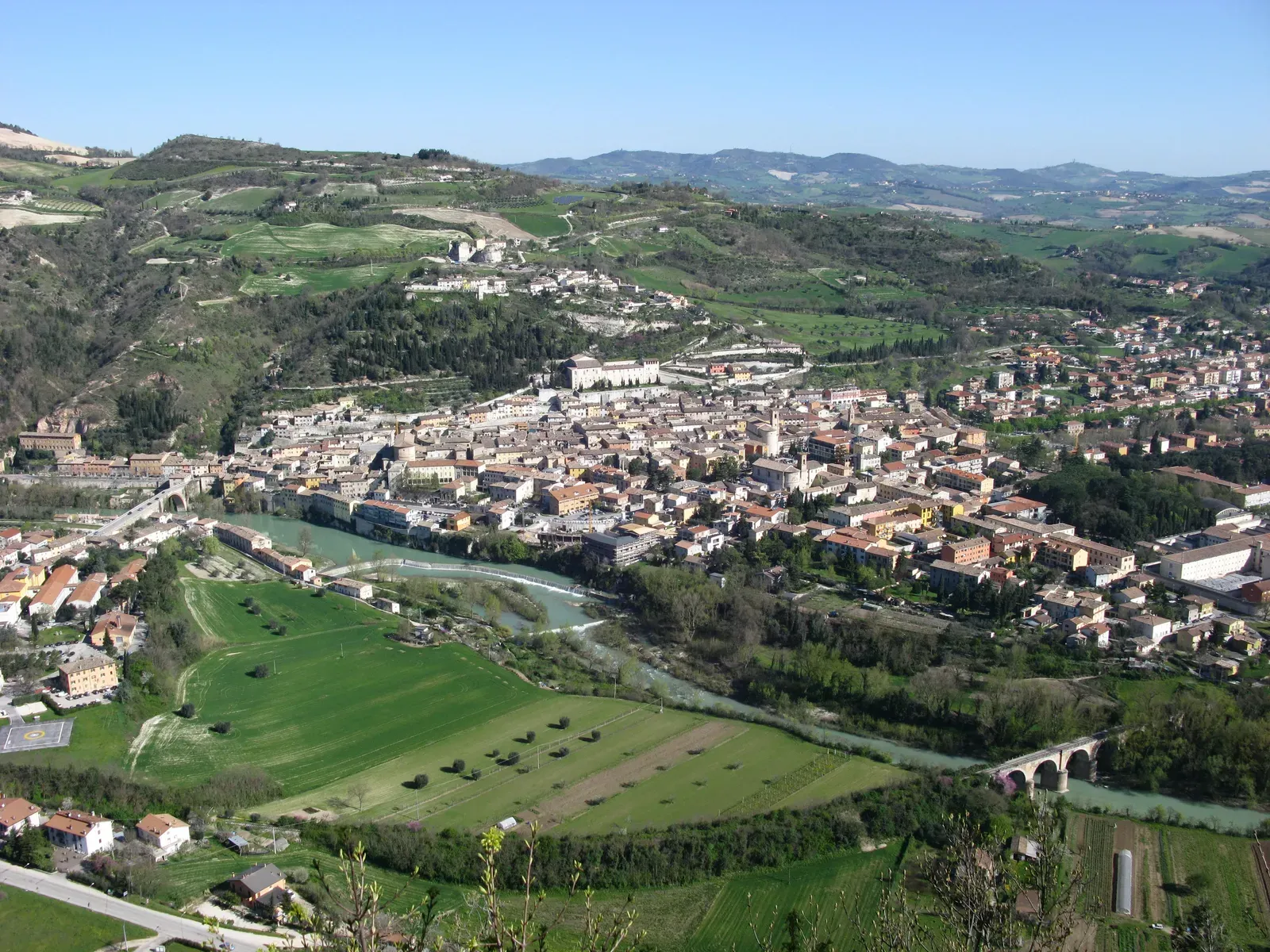
Fossombrone is the main town in the middle Metauro valley. Its name recalls Forum Sempronii, the Roman settlement that grew along the Flaminia near San Martino del Piano; the present town later developed on the hill overlooking the valley.
Fossombrone panorama · Toni Pecoraro · Public domain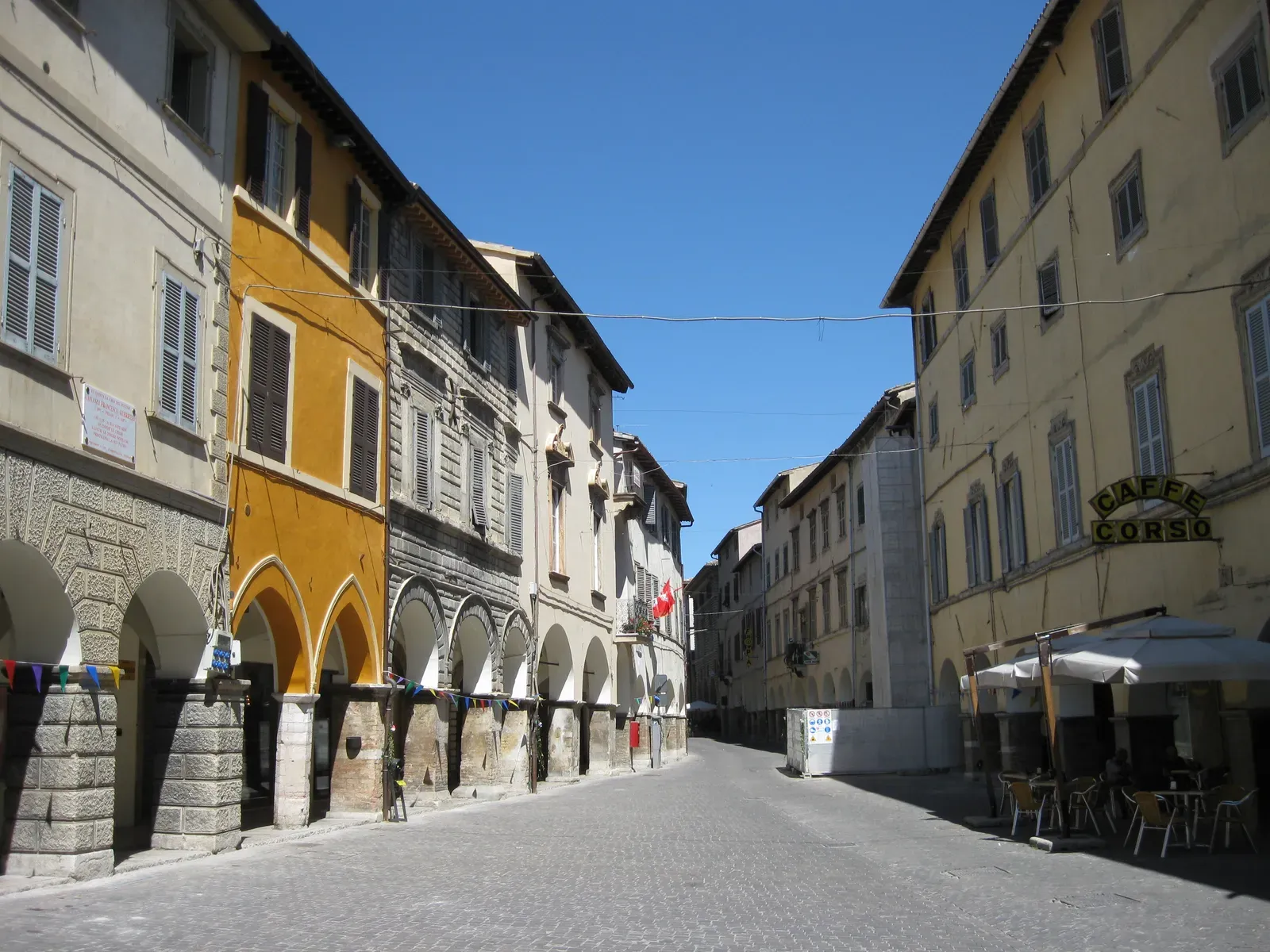
Corso Garibaldi runs through the heart of the town, with arcades and historic buildings. Depending on opening times and availability, places to consider include Corte Alta, Corte Bassa and Ponte della Concordia, which connects the two banks of the Metauro.
Corso Garibaldi, Fossombrone · Alicudi · CC BY-SA 3.0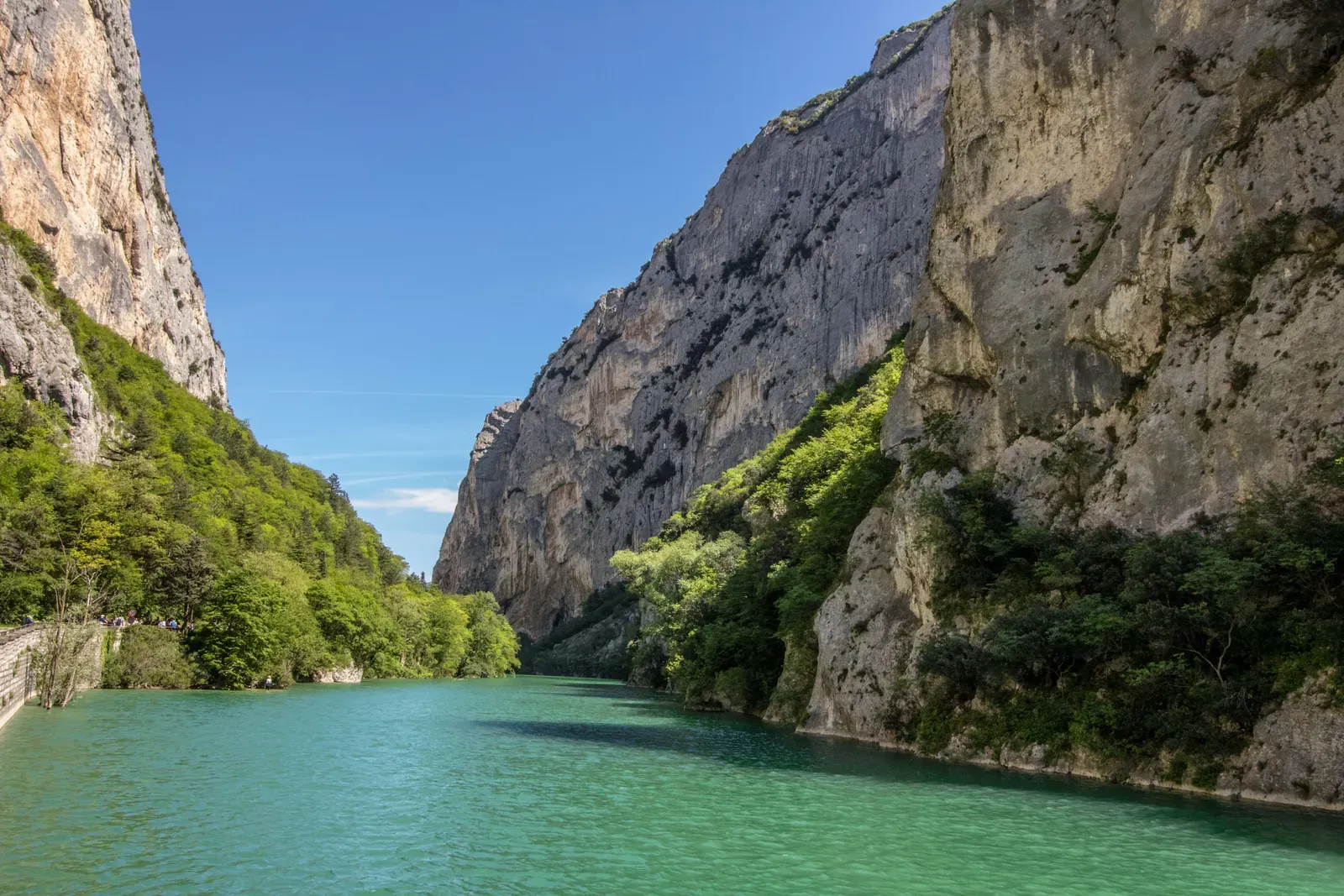
Furlo Gorge was carved by the Candigliano river between Monte Pietralata and Monte Paganuccio. Since 2001, the area has been a state nature reserve: take time to plan it and check current routes, conditions and services first.
Furlo Gorge · Mirko Marchetti · CC BY-SA 4.0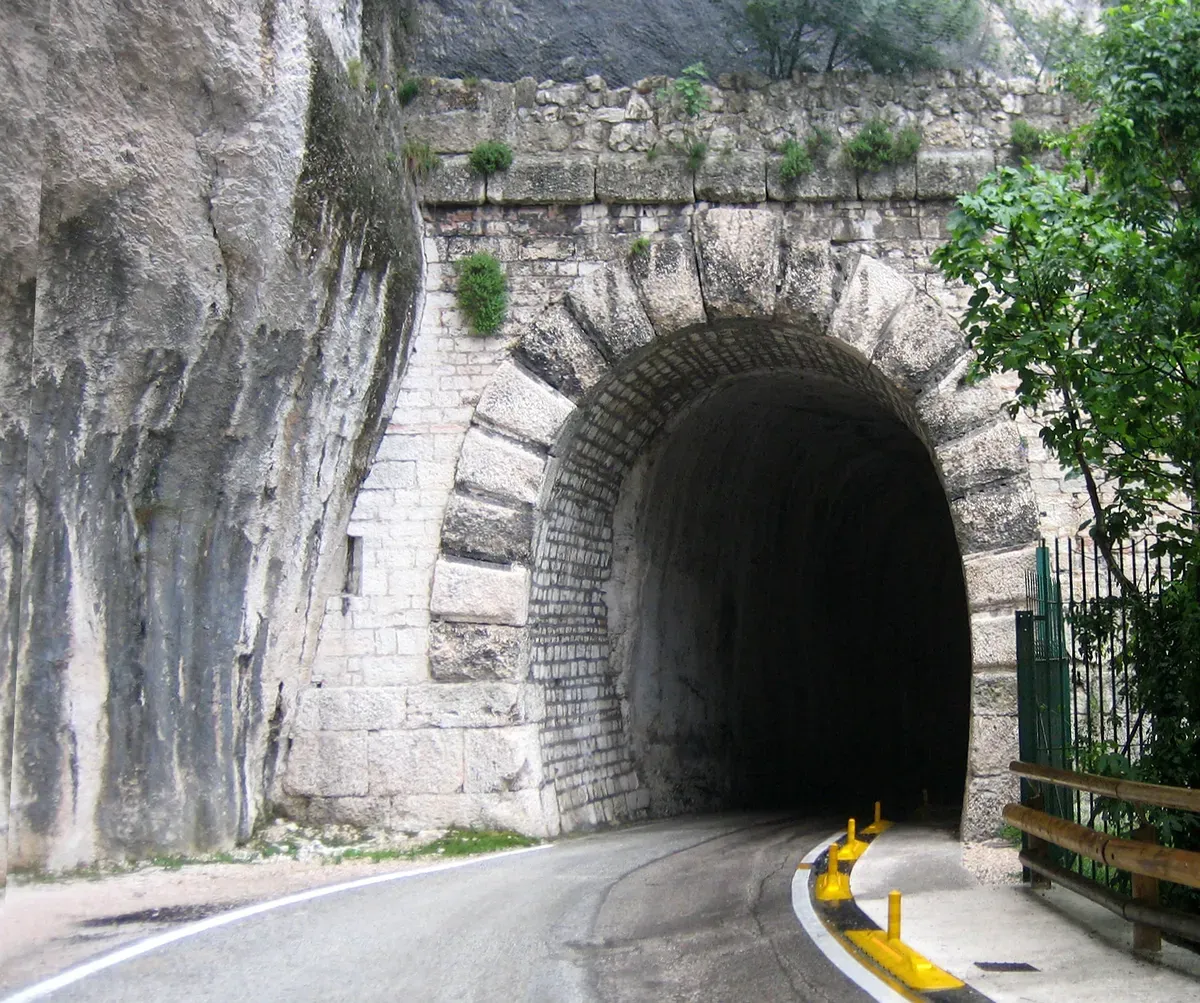
The Via Flaminia crosses the Furlo. At the narrowest point of the gorge is a Roman tunnel attributed to the age of Vespasian, a tangible sign of the link between this natural passage and the historic routes of central Italy.
Furlo Tunnel South · AlMare · CC BY-SA 2.5FAQs
The Marmitte dei Giganti are in San Lazzaro, a hamlet of Fossombrone, in the province of Pesaro and Urbino. The gorge lies along the Metauro river in the Marche region.
The easiest reference point is Ponte dei Saltelli, near San Lazzaro di Fossombrone. The map on this site includes a marker you can open directly in your navigation app.
Yes. Ponte dei Saltelli, also known as Ponte di Diocleziano, is the main viewpoint over the San Lazzaro Gorge and the limestone walls carved by the Metauro.
Yes. The Marmitte dei Giganti are in Fossombrone, in the Metauro valley, and fit naturally into a day out that also includes the Furlo Gorge or other places in the Marche countryside.
The visit is short and scenic, ideal for anyone who enjoys nature, photography and geology. If you choose to head down to the river, wear suitable shoes and always assess the water and rock conditions.
The Italian term marmitte refers to circular cavities carved into rock by swirling water and river-borne pebbles. In San Lazzaro Gorge, the Metauro has shaped them in the limestone walls and riverbed.
The gorge extends for about 500 metres. Its limestone walls reach around 30 metres in height and, at its narrowest point, it measures about one and a half metres across.
Yes. The gorge can also be explored by canoe or kayak on trips organised by local operators and associations. Before you visit, check availability, river conditions, equipment and any requirements directly with the organiser.
Social
Tell the story of the Marmitte through your eyes
Follow us on Instagram and share your photos by tagging @marmittedeigiganti or using #marmittedeigiganti: your post may be reshared on the official profiles.